Submission, Servanthood, Devotion
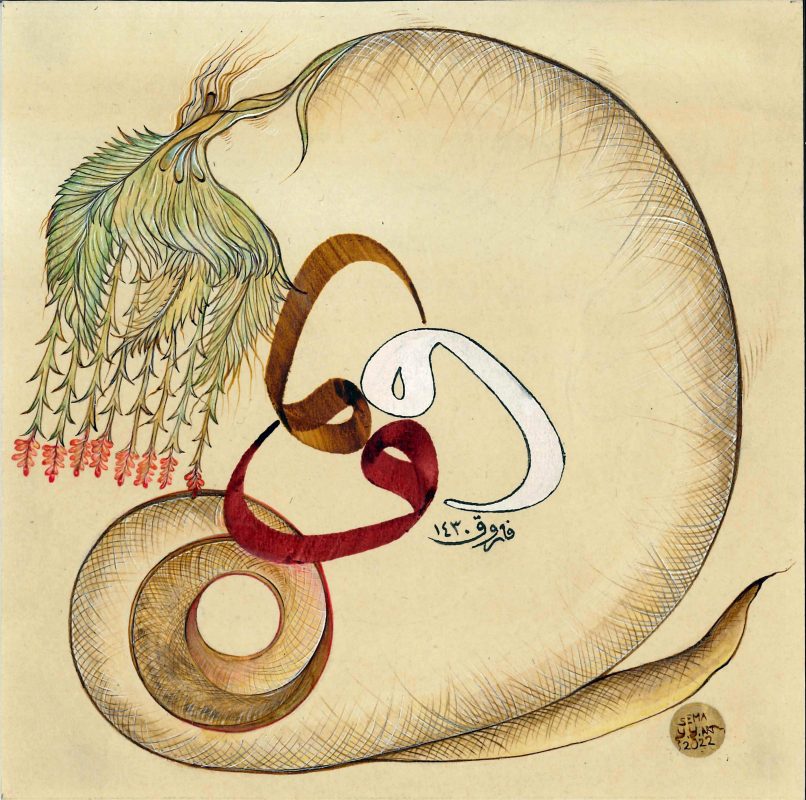
£150.00This artwork is great combination of Calligraphy and Miniature art. The calligraphy in the artwork is the letter WAW (Arabic letter). In Sufism, it symbolizes innocence and pure love. It also symbolizes both God and human being and can be seen as the statement of ‘unity of existence’ For artist, three WAWs represents ‘Submission, Servanthood, Devotion’ to God who created all the existence. The Calligraphy artist is Faruk Taskale.
Sultan’s Hunting Scene (Original)
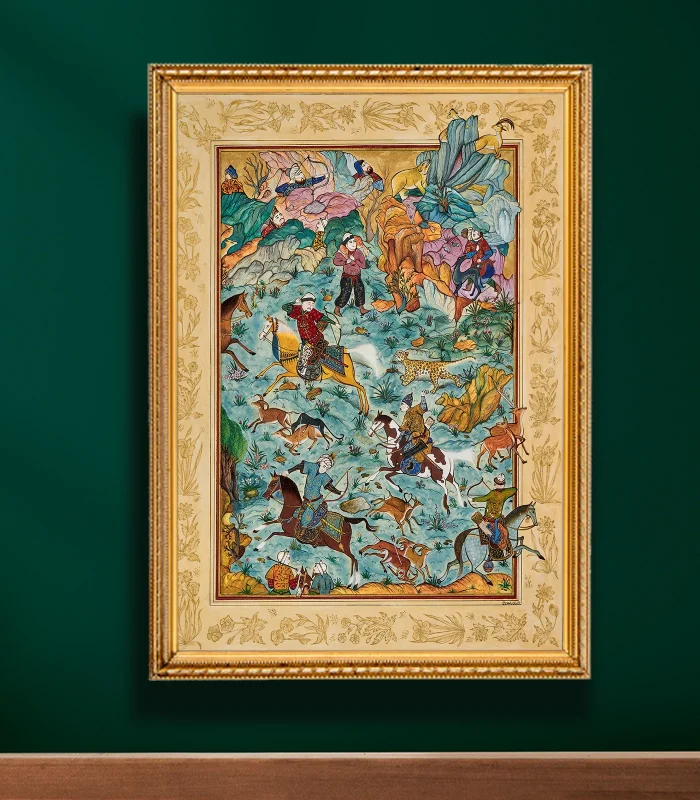
Landscapes, ceremonies such as enthronement in the palace, circumcision, weddings, and hunting scenes are among the subjects covered in Turkish miniature art. In this regard, Ottoman miniatures are considered historical documents, as they provide information about daily life, clothing, and rituals during the period. This miniature, which is entirely a product of the artist’s own imagination and creativity, is a hunting scene, and includes rich elements that provide information on a variety of subjects. The artist was inspired by the hunting stories and experiences of Ottoman Sultans. The hunters in this scene are dressed in traditional Ottoman hunting attire that was worn by sultans and are using traditional Ottoman hunting equipment. Animals that were hunted at the time are also depicted in the scene. The miniature contains some micro-details that can only be seen by closely inspecting the original artwork with a magnifying glass. The artist has used real gold in the yellow sections of the piece.
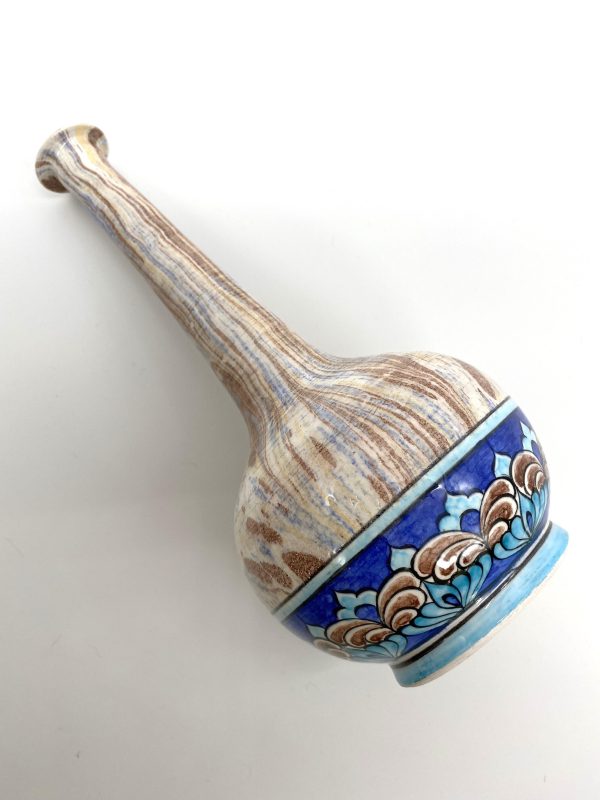
Tear Vase
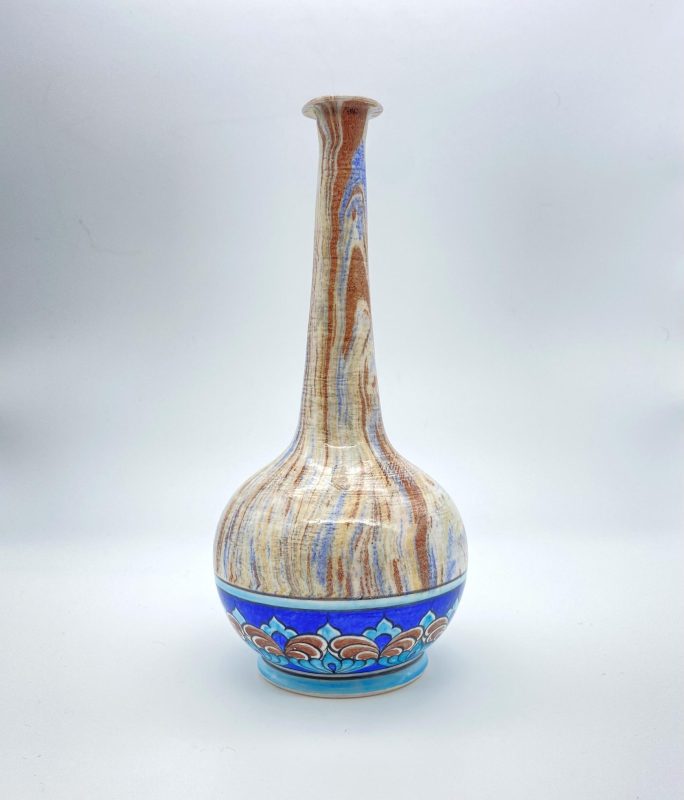
£140.00This ceramic vase, which represents a teardrop, is made of raw materials such as silica, clay, and frit. Tear vases, which date back to 400 BC, are derived from tear holders or tear bottles, which were used by women to store tears shed after their husbands died or joined the army and are a symbol of mourning. To create this unique piece, the artist used traditional ceramic making methods in conjunction with ebru (marbling art).
Tulip and carnation patterns were popular in Ottoman tile vase motifs, but the artist has created a striking composition in this vase by combining two well-known design techniques with her own interpretation. The top of the vase was painted using the ebru technique on an underglazed biscuit, which refers to any type of fired but unglazed pottery and was then glazed and fired. The artist has decorated the bottom of the vase using the marbling technique
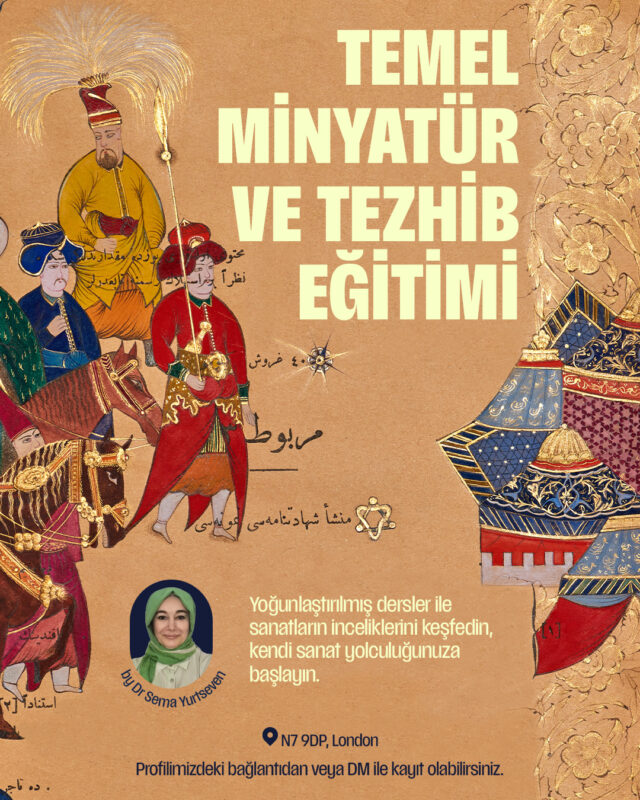
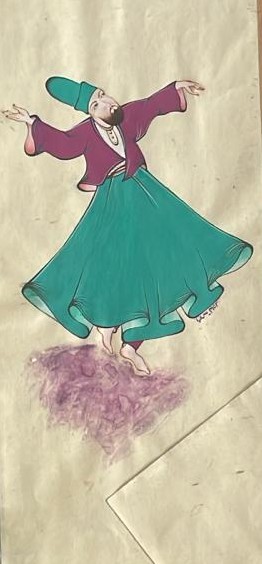
Tezhib ve Minyatur Kursu
£180.00 – £220.00Temel Tezhip ve Minyatür Dersleri, geleneksel tezhib ve minyatur sanatlarini temel seviyede öğrenmek isteyenler için hazırlanmış uygulamalı eğitimlerdir. Derslerde tezhipte halkâr ve rumi teknikleri, minyatürde ise hayvan figürleri ve mesnevi sahneleri çalışılır. Tüm malzemeler tarafımızdan sağlanır ve katılımcılar dersleri tamamlanmış eserlerle bitirir. Ayrintilar icin asagidaki aciklamayi okuyunuz.
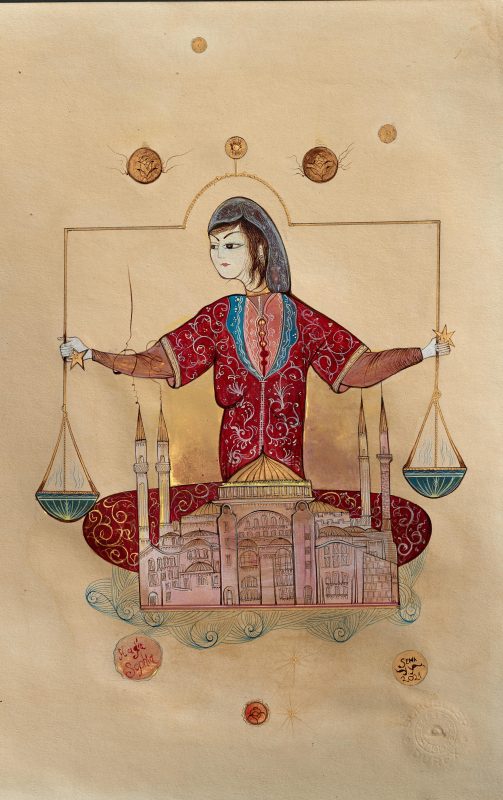
The Balance
The miniature artist, Sema Yurtseven, has uniquely designed and applied this harmonious and coherent miniature art. In the scene, Sultanahmet Mosque, also known as a Blue Mosque, was built between 1609 and 1617 Sultan Ahmet. It was built not only for as a mosque but also as a social complex across the Hagia Sophia. Hagia Sophia represents a brilliant moment in Byzantine architecture and art. It was built between 532 – 537 in Byzantine Empire in its capital, Constantinople (now Istanbul). The artist wanted to demonstrate Sultanahmet Mosque as a creating balance.
As you may see, there are many micro-details which can only be seen magnifying glass.
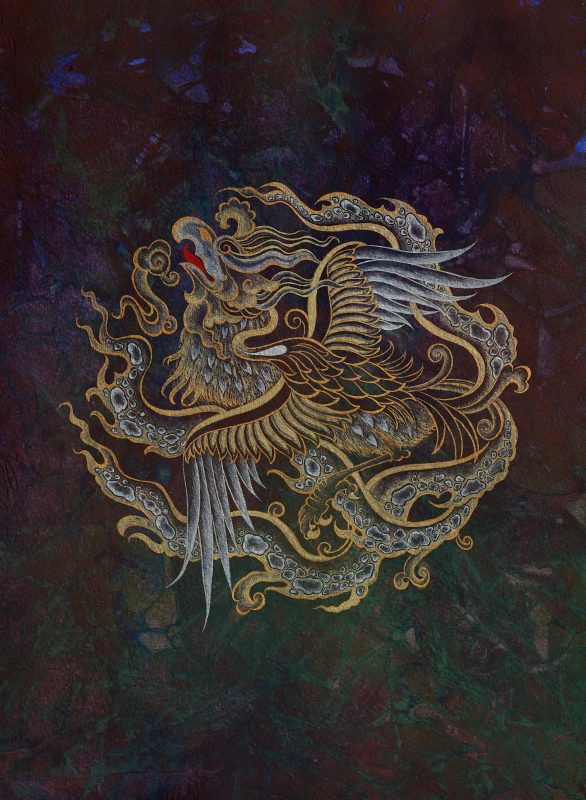
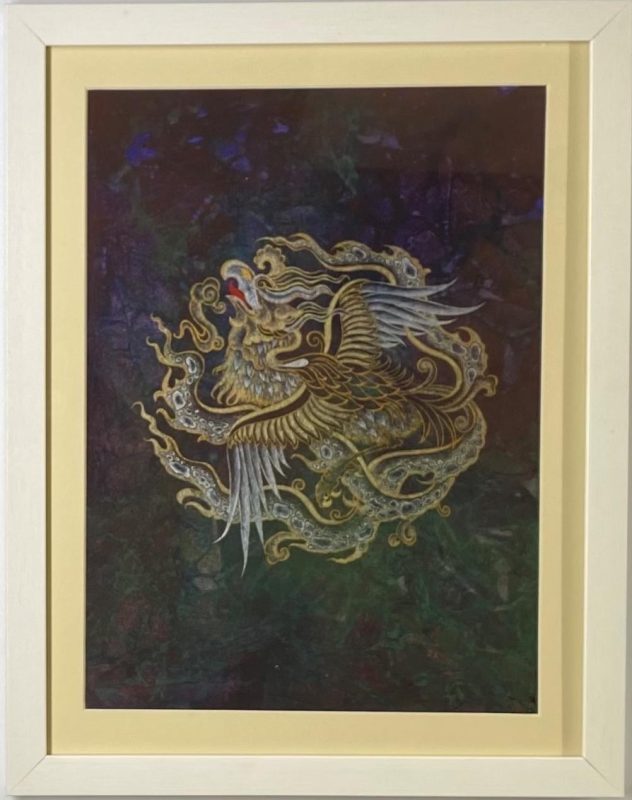
The Bird in Myth (Original)
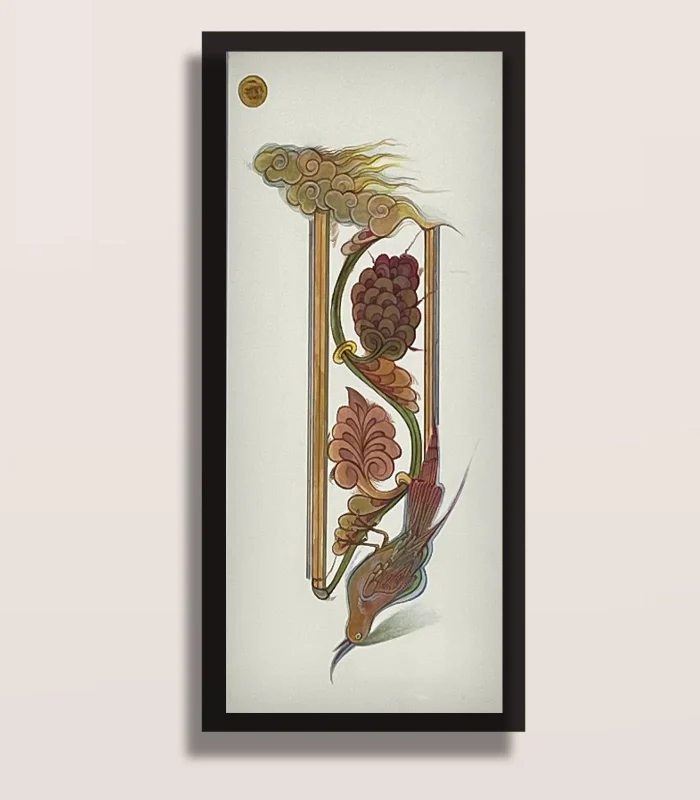
£150.00While miniature art generally deals with historical, literary, and scientific subjects, Turkish-Ottoman miniatures focused mostly on historical themes. However, in this work, the artist chose to paint a mythological bird that was not bound by classical subjects, time, or space. Mürvet Bilgin has recreated the mythologic bird Simurgh, a benevolent, mythical bird in Persian mythology, and has beautifully replicated the mythological figure by reflecting her imagination of the bird in colour. In addition, the artist has enhanced the scene by adding cloud-like motifs, which have added movement to the scene and affected the stance of the bird in the centre. The bird is originally black-and-white (located in the T.K.S Museum H.2160).
The Friendship
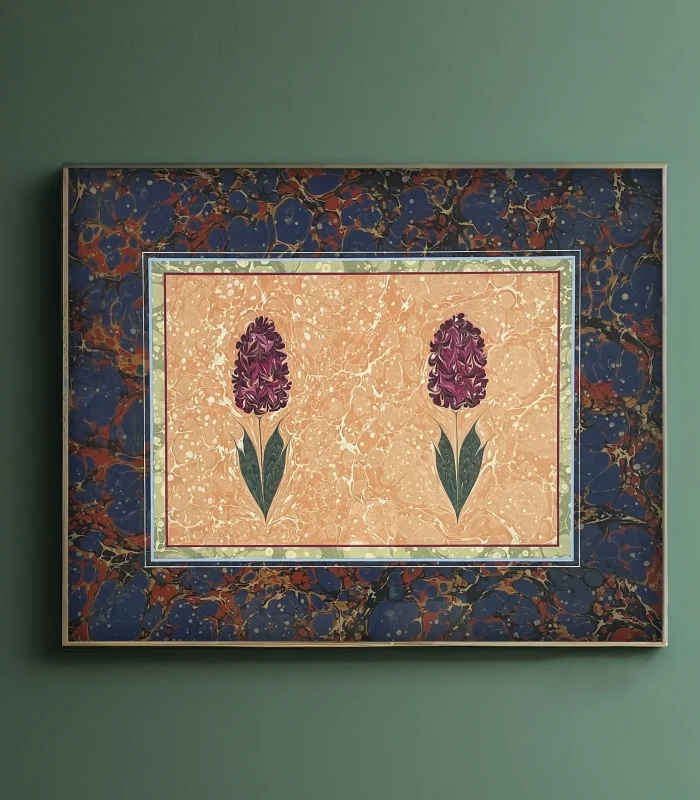
£250.00The centrepiece of this work of art is a twin hyacinth, one of the most advanced flowers used in Turkish ebru art. Twin flowers created in the same dimensions in very close proportions is regarded as a sign of mastery in ebru, as it requires skilled use of various materials on the surface of the water and is also dependent on a variety of conditions during the creation process. This artwork incorporates three marbling patterns: battal ebru (stone pattern), çiçek ebru (floral), and zemin ebru (background or base). The artist created the outer frame of this work in the battal ebru style, which is one of the basic patterns commonly used in marbling. Furthermore, the artist created the inner frame in the zemin (background or base) ebru style, which is commonly used as a background in hatip or flower designs. This section was created with lighter colour shades to stand out against the background.
The Green Dragon
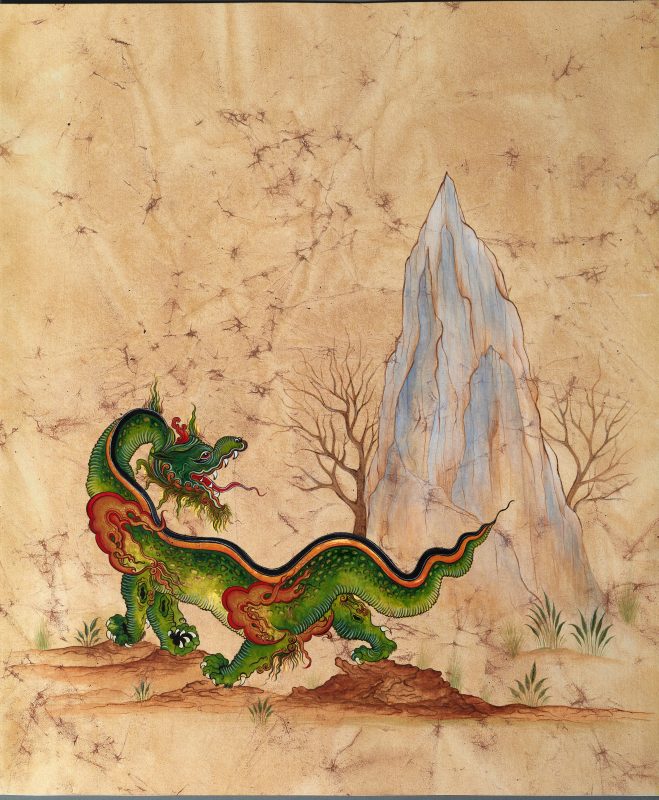
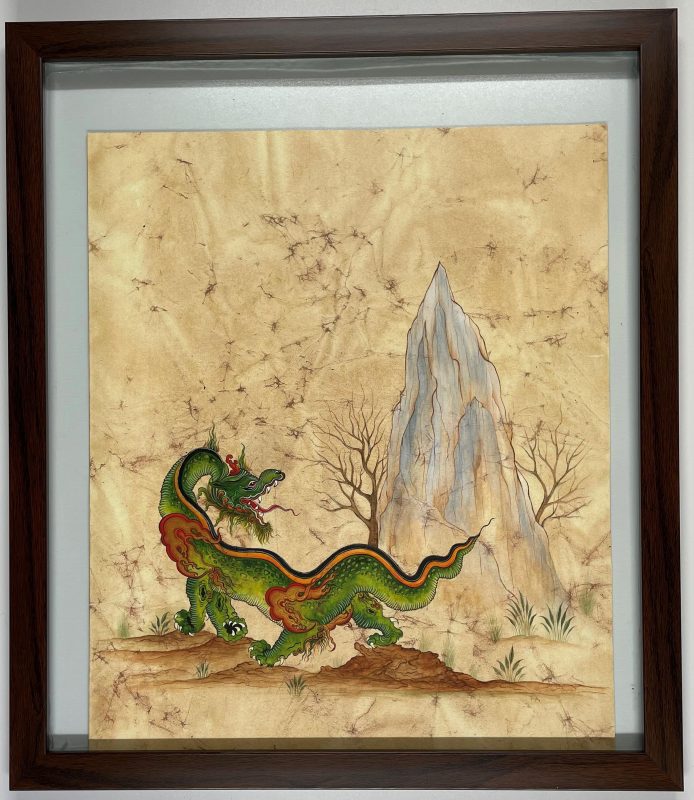
£155.00Humans, nature, and architectural elements are the most frequently depicted subjects in miniature art. Unlike classical subjects, the artist chose to use a mythological element in this work. Mürvet Bilgin has interpreted this originally black-and-white reproduction (located in the Bibliotheque Nationale, 4112, 1640-1648) in colour. The artist not only replicates this reinterpretation of the mythological dragon figure, but also incorporates it into a new scene designed by herself. The artist has added elements to the scene, such as the rock and trees behind the dragon, to create a particular narrative. The miniature contains some micro-details that can only be seen by closely inspecting the original artwork with a magnifying glass.
The Hidden Library
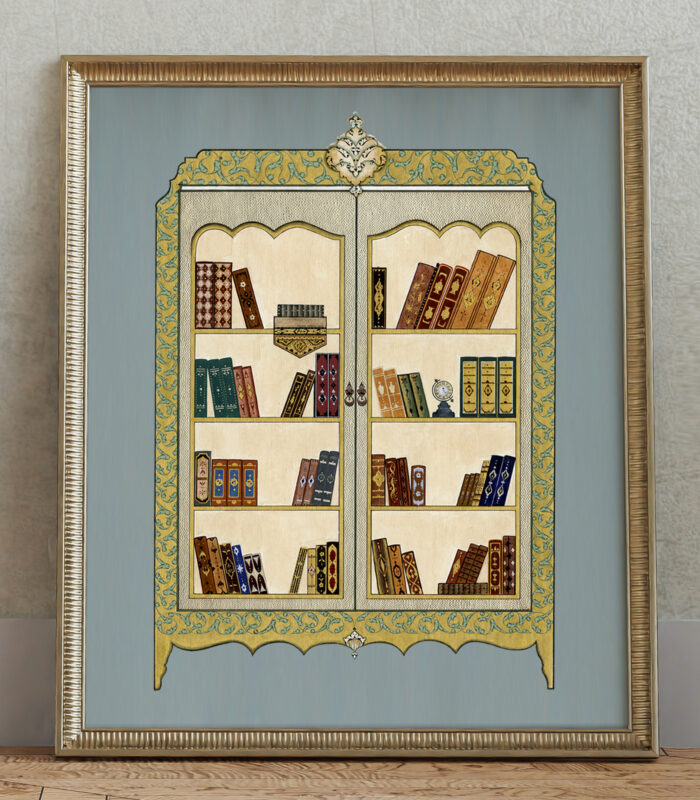
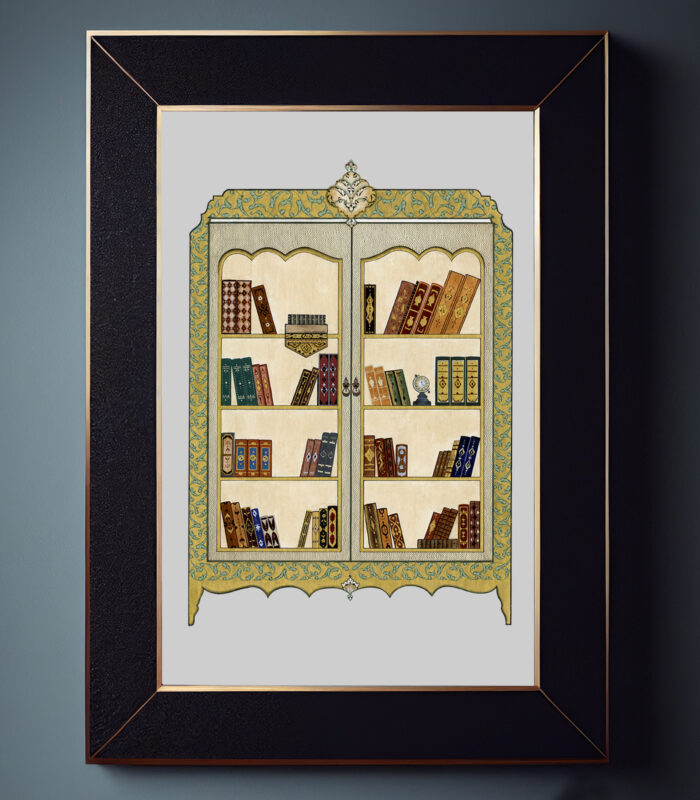
£1,600.00Discover the captivating beauty of Zehra Koblay’s latest creation, The Hidden Library, a free design masterpiece where traditional illumination and miniature techniques blend seamlessly. This unique artwork brings to life a library filled with both old and new books, as well as precious manuscripts.
The Hidden Library
£90.00Discover the captivating beauty of Zehra Koblay’s latest creation, The Hidden Library, a free design masterpiece where traditional illumination and miniature techniques blend seamlessly. This unique artwork brings to life a library filled with both old and new books, as well as precious manuscripts.